The Complete English Football Pyramid:
From Premier League Glory to Village Green Dreams
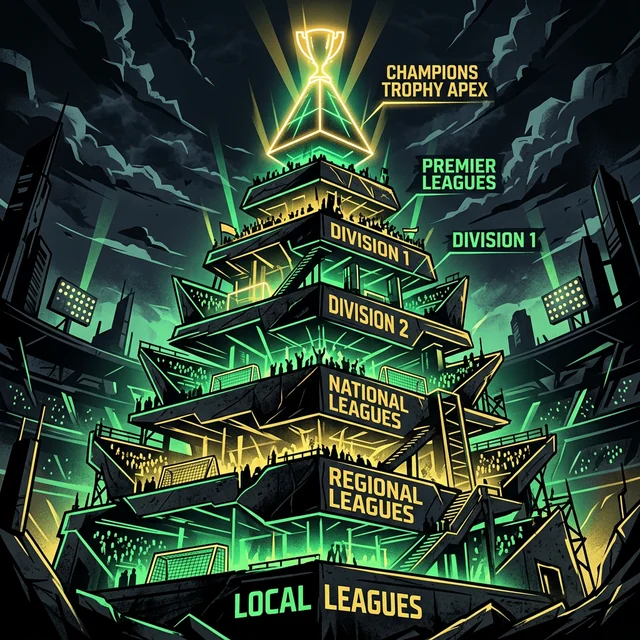
In theory, a club formed in a village park can climb ten promotions and reach the Premier League. There is no closed franchise system. No safety net. Just survival and the ascent.
That singular fact sets English football apart from nearly every other sporting structure in the world. The English football pyramid is not just a league system. It is a living, breathing monument to possibility.
This is the complete story of that pyramid. From the billion-pound spectacle of the Premier League down to works teams playing on muddy pitches behind pubs. Every tier. Every league. Every dream.
Understanding the English Football Pyramid Structure
The English football league system is the most comprehensive pyramid in world football. More than 700 clubs sit within the recognized structure. Each connected by promotion and relegation.
The pyramid operates on a simple principle. Win enough matches and you climb. Lose too many and you fall. This applies whether you are Manchester United or a Sunday league team dreaming of something more.
Geography plays a crucial role as you descend the tiers. The top four tiers operate nationally. Below that, the pyramid splits into regional divisions. By Tier 9, you are in county-based leagues where local rivalries define the season.
Complete Pyramid Visualization
Premier League
Football's Ultimate Stage. Twenty clubs. Thirty-eight matches each. Three relegated at season's end. The Premier League sits at the pyramid's summit as the most-watched football league on the planet.
Average matchday attendance exceeds 38,000 per match.
The Championship
The Hardest League in Football. Twenty-four teams battling across 46 matches makes the Championship perhaps the most physically demanding league in world football.
League One
League One sits as English football's third tier. The competition features historic clubs rebuilding after decline and ambitious teams rising through the pyramid.
League Two
The final tier of the English Football League. Beyond this point, clubs enter non-league football. Relegation from League Two is known as "The Non-League Drop".
National League
Where Dreams Meet Reality. The biggest bottleneck in the pyramid. One champion gets automatic promotion. Playoff winner from positions two through seven claims the second spot.
National League North & South
The pyramid splits geographically for the first time. If you can name clubs here, you are properly into football. Serious semi-professional operations with genuine ambitions.
Regional Premier
Northern Premier League, Southern League Central/South, and Isthmian League. Ground grading becomes increasingly important. Clubs issue modest payments.
Regional Divisions (Step 4)
Geographical divisions split heavily. Players often train twice weekly after work. Volunteers run turnstiles and tea bars. Every penny matters.
County Premier (Step 5)
Proper grassroots. Northern League, Midland League, Combined Counties League. Players represent their local club on Saturdays for the love of the game.
Localized County Leagues
Promotion is technically possible but ground grading creates an increasingly insurmountable barrier. Derby matches attract larger crowds but resources are minimal. Players receive no payment.
The True Bottom (Steps 7 & Below)
Village football. Works Teams. Pub-backed clubs. The Sheffield and Hallamshire County Senior League. No prize money. Referees are often fellow players. The dream begins here.
Tier 1: The Premier League - Football's Ultimate Stage
Twenty clubs. Thirty-eight matches each. Three relegated at season's end. The Premier League sits at the pyramid's summit as the most-watched football league on the planet.
The financial chasm between the Premier League and every other tier is staggering. Television rights alone bring billions into these twenty clubs. A single season in the top flight can transform a football club's finances for a generation.
Premier League Fast Facts
- Founded in 1992, breaking from Football League
- Global television audience exceeds 3 billion
- Players from more than 100 countries
- Bottom club still earns over £100 million
Relegation Reality: Clubs relegated receive parachute payments for three seasons to cushion the blow. Even with this safety net, many struggle to return.
Tiers 2-4: The English Football League
The English Football League (EFL) operates the three tiers below the Premier League: The Championship, League One, and League Two represent 72 clubs representing the professional game's core.
Tier 2: The Championship - Twenty-four teams battling across 46 matches. The top two teams secure automatic promotion. Teams finishing third through sixth enter the playoffs. One winner from three matches claims that final promotion spot.
Tier 3: League One - The promotion race is typically fierce. Historic clubs rebuild from administration alongside ambitious teams rising from non-league.
Tier 4: League Two - The EFL's Foundation. Two teams relegated drop to the National League, a massive shift known as the "Non-League Drop". Full-time squads often become part-time.
Tier 5: The National League
Occupies a unique position: the highest level of non-league football, and genuinely professional in operation. Twenty-four clubs compete with many operating full-time squads.
This tier represents the most significant bottleneck in the entire pyramid. Only two clubs earn promotion each season. One champion gains automatic promotion. The playoff winner from positions two through seven claims the second spot.
Discover the Depths of English Football
Subscribe to receive weekly insights into non-league football and promotion battles.
Join 15,000+ football enthusiasts exploring every level. Unsubscribe anytime.
Tier 6: National League North and South
The pyramid splits geographically for the first time. The North covers clubs from the Midlands northward; South encompasses the Southeast and Southwest. Each division champion is promoted automatically. Playoff positions 2-7 compete for the second spot.
Tiers 7 & 8: Regional Semi-Pro Football
Tier 7: Regional Premier Divisions - The Northern Premier League, Southern League Premier Central/South, and Isthmian League Premier. Clubs operate with significant budgets by non-league standards, attendances from 200 to over 1,000.
Tier 8: Step 4 - Divisions split into smaller geographical areas. Clubs here operate on tight budgets, typically £50,000-£150,000 annually. Success depends heavily on community engagement.
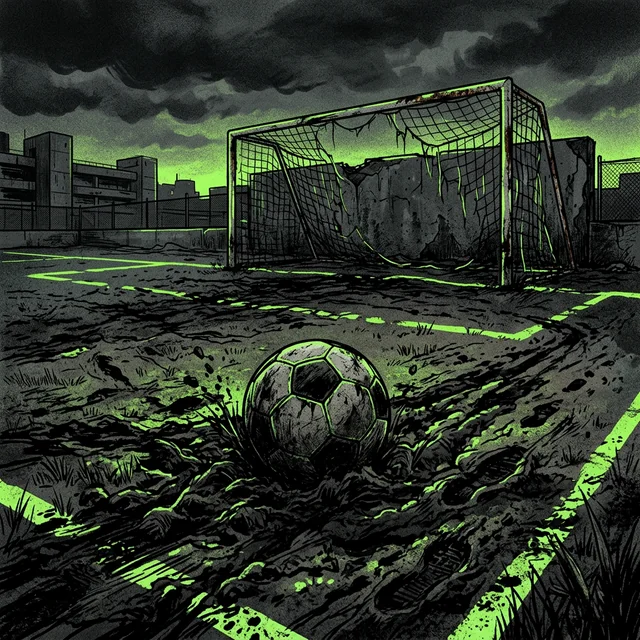
Tiers 9-11+: The Bedrock of Grassroots
Tier 9: County Premier Leagues - Northern League, Midland League, Combined Counties League. Players here are essentially amateur. The football is competitive but driven by pure passion and local rivalry.
Tier 10: Localized County Leagues - Promotion is theoretically possible but requires ground improvements (fences, floodlights) costing more than a club's entire annual budget.
Tier 11+ and Below - The true bottom. Village football, Works Teams, and Pub Teams. Below this lies Sunday League football; thousands of teams paying pitch fees, maintaining the democratic dream.
How Promotion and Relegation Works
- Automatic Promotion: Direct advancement for season-long consistency.
- Playoffs: High-pressure knockout matches for teams finishing just outside the top spots. Wembley finals provide dramatic windfalls.
- Automatic Relegation: No second chance. Financial implications are severe, and squad rebuilding is often required.
- Ground Grading: Promotion is denied if a club fails facility inspections (stadium capacity, pitch quality, safety/CCTV barriers).
Cup Competitions and the Pyramid
Cup competitions provide opportunities for clubs from different tiers to clash head-to-head.
- The FA Cup: Founded in 1871. Every club in the recognized pyramid can theoretically enter. Giant-killings fund non-league clubs for years.
- EFL Cup & Trophy: Competitions for the professional 92 clubs.
- FA Trophy & FA Vase: The pinnacle cup competitions for non-league and grassroots, culminating in Wembley finals.
Financial Sustainability by Tier (Avg Rating)
A bottom-half Premier League club's weekly wage bill exceeds the annual turnover of most National League clubs.
Remarkable Stories From the Pyramid Journey
AFC Wimbledon: When Wimbledon FC relocated to MK in 2002, supporters formed AFC Wimbledon. Starting at tier 9, they climbed to League One in just 16 seasons.
Luton Town: Dropped to the non-league abyss in 2009 after deductions. They fought back to the Premier League in 2023. Pyramid pathways work both ways.
Salford City: Heavily invested by the "Class of '92", they rose from the Northern Premier League to League Two in five seasons. Money accelerates the climb, but every match still needs winning.
The Journey Simulator
Test your club's ambition. Set your starting point, define your budget, and uncover the brutal reality of reaching the Premier League.
Future Challenges Facing the System
Financial inequality widens annually; parachute payments wreck Championship parity. Additionally, volunteer burnout is crippling grassroots teams. As the aging demographic struggles to recruit young tea-bar operators and groundsmen, community clubs risk extinction.
With financial regulations shifting from traditional P&S to division-specific rules, each tier of English football now operates under completely different financial ceilings and equity injection rules. For the full breakdown from Tier 1 to Tier 5, see our 5-League Financial Rules & Squad Cost Guide.
Frequently Asked Questions
Can a newly formed club really reach the Premier League?
Theoretically yes, though it would require decades of sustained success and massive investment. AFC Wimbledon climbed from tier 9 to tier 3 in 16 seasons. Reaching the Premier League would require at least three more promotions, likely taking another 10-15 years minimum even with significant resources.
How do clubs at lower tiers make money?
Lower-tier clubs operate on minimal budgets with revenue from gate receipts (typically £3-£7 per spectator), local business sponsorship, fundraising events, club bars, and community donations.
What happens if a club wins promotion but fails ground grading?
The club is denied promotion despite sporting achievement. They remain in their current division for another season. This regularly affects county league champions who cannot afford floodlights or fences.
The Pyramid's Enduring Significance
The English football pyramid represents more than a league structure. It embodies principles of meritocracy, community, and sporting integrity that increasingly feel rare in modern football's commercialized landscape.
No closed franchises. No protected positions. Just football. Pure, competitive, community-driven football across eleven tiers and beyond.
