Football Business Profitability Analysis: Is Football Really a "Big Business"?
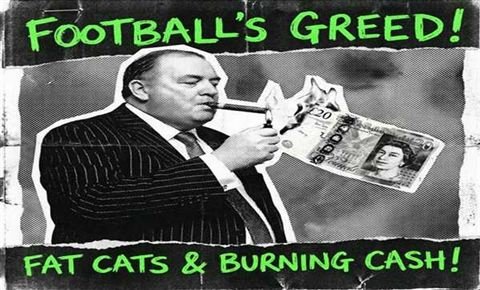
Football is often described as "big business." The evidence seems compelling: multi-billion pound TV deals, astronomical transfer fees, and Premier League clubs generating revenues that rival major corporations. But does high turnover truly make football a "big business" in the economic sense?
This football business profitability analysis challenges the conventional wisdom by examining what actually defines business success beyond the headlines.
What Truly Defines a "Big Business"
Before diving into our football business profitability analysis, we need to establish a clear definition. For this analysis, we'll define "big business" by a single, fundamental criterion: the consistent ability to generate profit. This definition intentionally excludes other factors that might make something seem like big business:
- Cultural significance or public visibility
- Media attention and coverage
- Revenue volume without corresponding profitability
- Brand recognition without financial stability
This narrow definition allows us to cut through the noise and focus on what matters in traditional business analysis: the bottom line. After all, the primary purpose of a business in economic terms is to generate sustainable profits for its owners or shareholders.
The Tesco Comparison: Similar Turnover, Different Outcomes
The book "Soccernomics" introduced a compelling comparison between football clubs and Tesco supermarkets. This comparison isn't about cultural impact or visibility but focuses squarely on financial performance relative to turnover.
"Football clubs and Tesco stores may generate similar revenues, but one consistently creates profit while the other consistently absorbs it."
This distinction is crucial. Both entities move large sums of money, but with fundamentally different economic outcomes. Tesco converts its revenue into profit that can be reinvested or distributed to shareholders. Football clubs, by contrast, typically cycle all revenue back into operational costs, primarily player wages and transfers.

The Maths: Tesco Extra vs. Championship Club
The comparison reveals a stark contrast. A single Tesco Extra store and a Championship football club may handle similar amounts of money annually. However, the supermarket consistently generates millions in profit, while the football club typically struggles to break even, despite comparable revenue streams.
Even at the highest level of English football, where revenues have grown by 2,559% since 1992, expenditure on wages has risen by 3,613%. This demonstrates that increased revenue in football doesn't lead to increased profitability—it simply raises the cost base as clubs compete for talent.
Why Football Cannot Behave Like a Big Business
The profitability challenge in football isn't due to poor management or lack of business acumen. It's a structural feature of the industry itself. Our football business profitability analysis reveals several key factors that prevent football from functioning like traditional businesses:
- Competitive Cost Drivers: Player wages rise with available revenue, and transfer market inflation is constant.
- Profit as Competitive Disadvantage: Profit is viewed as foregone competitive opportunity. Fans demand reinvestment, not dividends.
In this environment, profit becomes a liability rather than an asset. A club generating significant profit would face intense pressure from supporters to "show ambition" by spending that money on players. This creates a perpetual cycle where increased revenue leads to increased spending rather than improved financial stability.

Answering the Question: Is Football a Big Business?
Based on our football business profitability analysis, the answer is clear: Football is not a "big business" in the traditional economic sense. While it generates substantial revenue, it systematically fails to convert that revenue into sustainable profit—the fundamental criterion of business success.
"Football is not a business. It's a sport that costs a lot of money to be successful at." — Anonymous Premier League executive
The structural features of football—competitive wage inflation, the prioritization of sporting success over financial returns, and the pressure to reinvest all available resources—create an environment where traditional business metrics simply don't apply.
Understanding this reality is essential for anyone involved in football governance, investment, or management. The challenges facing football are not due to poor business practices but are inherent to the competitive nature of the sport itself.
This structural dynamic also explains why the English pyramid moved away from theoretical multi-year profit tests toward real-time squad cost surveillance. For an in-depth breakdown of how spending caps, owner equity allowances, and luxury tax thresholds actually operate across every division, explore our investigation: The English Football Financial Rules Guide: What Squad Cost Rules Actually Mean Across All 5 Leagues.